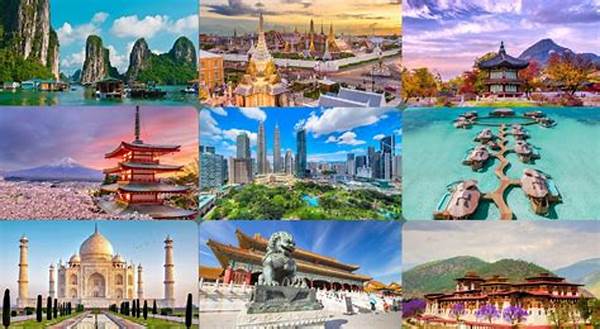
Asia Famous Landmarks
Asia, a continent bursting with rich histories, diverse cultures, and mind-blowing landscapes, is also home to some of the world’s most famous landmarks. Imagine a journey that takes you from the bustling streets of Tokyo to the tranquil temples of Bali, ending at the bustling bazaars of Istanbul. Each location tells a story, not just of the place, but a chronicle of the people who lived there, shaping the monument into what it is today. These landmarks are not mere tourist attractions; they are a symphony of emotions, a testament to human creativity, resilience, and the passage of time. Step into these architectural marvels and feel the palpable history echoing through the corridors. Whether you’re an avid traveler or someone basking in the comfort of your living room planning the next escapade, the allure of Asia’s famous landmarks is irresistible and promises an unforgettable adventure crafted uniquely for every wanderer.
The notion of embarking on a journey through Asia’s famous landmarks isn’t just an experience; it’s a transformative adventure that taps into your innermost desires to discover, learn, and understand. These sites are gateways into the past, present, and future simultaneously. The Great Wall of China not only provides breathtaking views but whispers tales of ancient warriors and emperors. The Taj Mahal isn’t just a testament of love carved in marble, it’s a legend etched in time. We live in a fast-paced era, but the landmarks of Asia evoke a moment’s pause, encouraging reflection and appreciation of life’s grandeur and simplicity wrapped in cultural splendor.
Traveling through Asia and witnessing its famous landmarks are akin to flipping through the pages of a history book that comes alive. It’s a chance to have an enlightening conversation with the past while nurturing a deeper understanding of the present. These iconic structures aren’t just static testimonies of human accomplishment but vibrant entities that continually inspire awe and wonder. So, pack your bags, charge your camera, and let’s embark on this spellbinding journey across Asia’s famous landmarks together!
Exploring Top Asian Landmarks
The journey across Asia feels incomplete without a visit to the pristine temples of Angkor Wat in Cambodia. The sheer magnitude and intricate artistry make it a masterpiece of historical and architectural significance. Picture this: standing in the midst of jungle-surrounded ruins, the golden hues of dawn breaking the horizon, casting a mystical glow on ancient stone carvings. Such sights evoke a sense of wonder and a thirst for deeper knowledge, highlighting the landmark’s significance as a testimony of a bygone era.
In the bustling cityscape of Japan, Mount Fuji stands as a beacon of natural grandeur amidst urban development. Its near-perfect symmetry, often capped with snow, represents balance and tranquility in a world of chaos. Whether climbing its peaks or catching a glimpse from afar, Mount Fuji offers an unforgettable visual treat that connects people to nature’s magnificant artistry. This iconic symbol isn’t just a geographic fixture; it’s woven into the cultural and spiritual fabric of Japan, embodying the harmonious coexistence with nature that is vital to Asian philosophy.
A trip to the Middle Kingdom would be sorely lacking without marveling at the ingenuity of the Great Wall of China. Originally built as a defense mechanism, today it stands serenely as a testament to humanity’s ingenuity and perseverance. Stretching over 13,000 miles, this monument provides more than just a captivating view; it prompts introspection and admiration for the people who, stone by stone, built this magnificent structure. A walk along its ancient paths is not merely tourism; it is communion with history, an exploration of one’s fascination with Asia’s famous landmarks.
—
Introduction to the Wonders of Asian Landmarks
Asia’s famous landmarks, monuments of ageless beauty and architectural grandeur, stand as silent witnesses to history’s rollercoaster of human civilization. Across vast lands and diverse cultures, these landmarks beckon travelers and history enthusiasts alike, eager to unveil the tales etched into every stone and corner. Imagine, if you will, strolling through these majestic sites—a visceral sensation of stepping back in time, of being part of something larger than life. Each landmark offers insights not only into the past but subtly nudges us to interpret the implications on our modern lives and collective future.
Nestled amidst bustling modern lands, the essence of Asia’s famous landmarks employs a hypnotic pull. Their grandeur is such that they are often ingrained in the collective consciousness; you need not be a seasoned traveler to feel their magnetism. Whether it is the vibrant stories from the veins of the Forbidden City, the towering grandeur of Singapore’s Marina Bay Sands, or the spiritual allure of Nepal’s Boudhanath Stupa, each site has its unique charm, mesmerizing visitors from every walk of life.
The Historical Significance of Asian Landmarks
The significance of these landmarks transcends beyond mere aesthetics; each stands as a testament to human endeavor, an embodiment of cultural identity and prowess. From trade to military conquests, Asia’s historical landmarks have shaped not only regional dynamics but also global narratives. They embody a bridge between generations, preserving traditions, arts, and stories that continue to inspire and educate. This historical tapestry woven through sites like Iran’s Persepolis and India’s Qutub Minar reveals a fascinating mosaic of ancient empires, enduring through time’s relentless march.
Each landmark is a canvas of cultural expression. Reflecting ingenuity, they encapsulate the fusion of art and functionality achieved through architecture. Take, for instance, Japan’s Hiroshima Peace Memorial, a poignant symbol of resilience and recovery, inviting reflection on peace and the value of life. Likewise, Seoul’s Gyeongbokgung Palace offers an extraordinary glimpse into the intricacies of Korean history and traditions, effortlessly melding place and time into the continuous story of human life.
Modern-Day Attraction and Relevance
In today’s world, the demand for unique experiences has skyrocketed. The ability to stand where emperors once stood or gaze upon landscapes that have witnessed the rise and fall of dynasties holds an almost mystical appeal. Asia’s famous landmarks not only provide a connection to history but also offer modern-day travelers a unique perspective on the passage of time and the resilience of civilizations. Digital conveniences might guide our visits, but the analog heartbeats within these stones remind us of the tactile history.
These sites invest in preserving cultural heritage while engaging communities and fostering sustainable tourism. Their role goes beyond mere sightseeing; they are hotbeds for jobs, creativity, and education. Imagine analyzing the intricate sculptures of Borobudur or documenting the architectural genius of Bangkok’s Grand Palace—these activities offer fertile grounds for research and learning, igniting interest in conserving Asia’s rich heritage.
Experiencing Asia’s famous landmarks goes beyond checking off a bucket list; it enriches the soul, broadens the horizon, and subtly imbues travelers with a profound affection for cultural heritage. Each visit encourages dialogues between the past and present, weaving vibrant threads into the fabric of human understanding. It is not merely sightseeing but a dynamic engagement with history—one that leaves a lasting imprint on every visitor’s mind and heart.
—
Examples of Asia Famous Landmarks
The vastness of Asia is mirrored in the mesmerizing diversity of its famous landmarks. From the winding paths of the Great Wall of China to the majestic beauty of the Taj Mahal, each landmark stands as a tribute to the continent’s rich tapestry of culture and history. They aren’t mere edifices, but symbols of human innovation and passion, resonating with tales as old as time. Every stone, curve, and inscription carries its weight in gold, to be unraveled as a tale or lesson of ages.
Standing before the towering splendor of these landmarks, one cannot help but marvel at the symbiosis of human craftsmanship and nature’s bounty. Each site graces our sense of wonder as the pages of history unravel slowly, offering an array of stories ingrained into the site’s essence. Complete your journey through time by immersing in these chronicles, each distinctly remarkable yet harmoniously interwoven into the grand narrative of human civilization.
The fusion of past and present, tradition and modernity, is captured brilliantly. These landmarks beckon those with a keen sense of adventure and a thirst for knowledge, revealing a world ripe for discovery and enlightenment. Each etched stone represents a chapter of a story, waiting to be conveyed, connecting hearts across borders through shared appreciation for beauty, art, and history. So embark upon this journey of exploration armed with curiosity—who knows what wonders await to ignite your imagination among Asia’s famous landmarks?
—
Unveiling the Best of Asia’s Famous Landmarks
A Compelling Journey Through Time
If you’re a traveler with a penchant for uncovering stories, Asia’s famous landmarks are your call to action, each narrating tales of glory, faith, and human endeavor. They embody the spirit of an era long gone, accessible to all who dare to listen. Think of them as well-crafted narratives, whose chapters await to transport you to a realm of fascination and awe. Each landmark is a chapter in the continent’s history, offering vivid stories of yesteryears and hopes for the future.
The journey through these landmarks is more than a traveler’s trope. It is an active engagement with past cultures, inviting introspection into the cyclical nature of human achievement. Explore Siam’s Praetscarbak Stupa or the historical marvels of Bhutan’s Tiger’s Nest Monastery; your encounter with these structures offers room for personal growth and empathy, weaving you into the evolving story of our shared heritage. How do these tales resonate in today’s world, invoking a vision of timeless wisdom intertwined with modern pursuits?
Engaging Today’s Traveler
For today’s globetrotters, Asia’s prominent landmarks provide the ultimate creative landscape for exploration and discovery. As captivating destinations, they cater to a myriad of passions—be it historical intrigue, architectural wonder, or spiritual solace. From the hanging gardens of Hunan to the elaborate pagodas dotting Vietnam’s serene countryside, the interplay of artistry and nature within Asia’s famous landmarks presents boundless opportunities for inquisitive minds.
With tourism playing a crucial role in these sites’ economies, conscientious visitors carry a dual responsibility: appreciating the rich history while advocating sustainable practices. Imagine being part of a community working to preserve these jewels for future generations, amalgamating technology with curiosity to ensure their endurance. In their preservation, these magnificent sights remain as binding threads of collective memories, offering not just aesthetic pleasure but a profound influence on cultural identification and progression.
Preserving Heritage for Future Generations
Asia’s famous landmarks inspire stewardship for cultural preservation, transcending mere travel itineraries to become pillars of heritage education and conservation. They are integral in shaping local identities, nurturing cultural pride, and uniting diverse communities. Efforts geared toward protecting these landmarks earn the distinction of being part of a global narrative on historical preservation, ensuring their stories continue to be recounted for centuries to come.
These landmarks provide a bridge of understanding between ancient worlds and contemporary society. By fostering a commitment to respect and learn from these cultural behemoths, you not only enrich your life with stories untold but contribute valuably to the ongoing dialogue on cultural preservation. With a heart of exploration and a mind of mindfulness, your journey through Asia’s famous landmarks is more than just sightseeing; it’s an important chapter in the story of human curiosity and shared legacy.
—
Highlights of Asia’s Famous Landmarks
Cultural Significance and Historical Relevance
Embarking on a journey through the famous landmarks of Asia conjures a whirlwind of emotions. The impact resonates on both an intellectual and experiential level, bridging gaps between the past and present. As you delve into these unique cultural gems, you gather insights not only from the grandeur of past civilizations but also from the realities faced by these landmarks in contemporary times. Crafted by skilled hands and brilliant minds, every inch tells its story—one of engineering excellence, cultural foresight, and the enduring spirit of humanity.
Engagement with these historical sites exceeds typical tourism. It enriches the traveler, inviting ponderance on evolution—from trade fortresses to modern metropolises, each landmark signifies a transcendence across time. The rich tapestry of Asia’s famous landmarks offers window views into diverse eras and cultures, each narrating the depth of human experience against an astounding geographical backdrop.
In preserving these wonders, we invite the blending of old with new, instigating dialogues on not just heritage preservation but also on developing sustainable environments. Each visit becomes a pilgrimage, a journey of validation and appreciation, immortalizing the essence of Asia’s famous landmarks in every traveler’s heart—tales passed from one generation to the next, deifying the wonder that remains integral to our shared cultural consciousness.